
Software Development Methodologies: Effective Strategies to Showcase Dynamic Web Applications for Clients
A slick demo can still lose a deal if the client can't see how you built it, how you'll maintain it, and how risk stays controlled. That's why Software Development Methodologies should be part of your presentation, not hidden in your backlog. If you're showcasing a dynamic web application to clients, you're really selling confidence: clarity of scope, predictable delivery, measurable quality, and a process they can trust.
This guide breaks down practical, repeatable ways to present dynamic web apps so non-technical stakeholders understand the value and technical buyers respect the rigor. You'll see what to show, what to say, and how to structure proof so your demo doesn't feel like a magic trick, it feels like a reliable plan.
Start with the Method, Not the UI
Most developers lead with the interface because it's tangible. The contrarian move is to lead with the method, then use the UI as evidence. Clients have been burned by "great-looking" prototypes that never shipped, so anchoring your story in Software Development Methodologies makes the rest of the demo feel safer.
Frame your app as the output of a disciplined system: discovery, architecture, implementation, testing, release, and iteration. Keep the language simple and tie each practice to a business concern like timeline, budget, security, or user adoption.
Here's a client-friendly way to explain methodology without sounding academic:
- Agile or iterative delivery reduces risk by validating assumptions early.
- Continuous integration prevents "big bang" merge problems.
- Automated tests protect critical workflows during changes.
- Code reviews and standards reduce hidden maintenance costs.
- Observability (logs, metrics, tracing) speeds up issue resolution.
After you list these, connect them to a single promise: "You'll always know what's next, what's done, and what could block us." That's the emotional outcome clients want.
For a deeper overview of how dynamic projects translate into business results, reference Dynamic Web Application Development for Clients as supporting context during a proposal or follow-up email.
Build the Demo Like a Case Study with Receipts
A dynamic web application demo works best as a narrative, not a tour. Treat the presentation like a case study where each feature proves a decision you made. Your goal is to show not only that it works, but that it was built in a way that can evolve.

Structure your demo around a single workflow that matters to the client, like onboarding a user, processing a payment, generating a report, or syncing data. Then show how the app handles real-world variation, not the happy path. Dynamic apps earn trust when they handle edge cases gracefully.
Use this sequence to keep stakeholders engaged and align with buying criteria:
- State the business problem in one sentence.
- Show the workflow end-to-end in under two minutes.
- Pause on the "dynamic" parts (role-based UI, real-time updates, data validation).
- Reveal what happens behind the scenes (API calls, background jobs, caching).
- Close by explaining how your Software Development Methodologies made the result predictable.
Between steps 3 and 4, add a brief explanation of architecture choices in plain English. For example, "This runs as a client app that talks to a secure API, so we can iterate UI fast without touching core data rules."
To strengthen credibility, bring in basic performance expectations and measured results. Google's Core Web Vitals guidance gives you a widely recognized framework for discussing responsiveness and stability without making it about vanity metrics.
Show the "How" with Visual Artifacts Clients Understand
Clients don't need your entire Jira board, but they do need proof that delivery is organized. The best artifacts are lightweight, visual, and tied to outcomes. Think of them as trust accelerators.
Start with a one-page delivery map that explains phases and decision points. Then show a short sample of what they'll see weekly: milestones, progress, risks, and next actions. This is where Software Development Methodologies become real, because you're demonstrating the communication rhythm.
Examples of artifacts that translate well for non-technical and technical audiences:
- A simple roadmap with 2-week increments and measurable outputs
- A user flow diagram showing key paths and drop-off points
- An API contract snippet (even a screenshot) that shows stable boundaries
- A test summary, such as "42 automated checks cover login, checkout, and permissions"
- A release checklist that includes security and rollback
After showing artifacts, explain how you keep scope from silently expanding. Mention a change-control habit like lightweight impact notes: "If we add X, it affects Y timeline and Z cost." That single sentence can separate you from competitors who promise everything.
Security is often a deciding factor for dynamic apps that handle user data. Referencing established guidance boosts E-E-A-T quickly. The OWASP Top 10 is an industry baseline for web application risks, and it's client-friendly when summarized carefully. Use OWASP Top 10 to explain the categories you proactively defend against, such as injection, broken access control, and misconfiguration.
Make Interactivity the Star, Not the Feature List
A dynamic web application isn't "dynamic" because it has a lot of features. It's dynamic because it adapts, responds, and stays consistent under changing inputs. Your job is to showcase responsiveness as a product capability.

Instead of listing features, show behaviors:
- Role-based access that changes what users can see and do
- Real-time updates via websockets or polling for live dashboards
- Form validation that prevents costly support tickets
- Offline-friendly patterns or graceful degradation where relevant
- Audit trails and activity logs that support compliance
Then connect each behavior to a business result. Role-based access reduces mistakes and protects sensitive actions. Real-time updates shorten decision cycles. Audit trails make operations safer and easier to debug.
If you want to be even more persuasive, demonstrate "failure modes." Intentionally input invalid data, simulate a slow network, or show what happens when an API returns an error. Clients remember resilience because it signals maturity.
A practical way to tie these behaviors back to Software Development Methodologies is to explain how you test them. For example, "We cover permissions with automated tests so a future change can't accidentally expose admin controls." That's methodology translated into risk reduction.
If your portfolio needs stronger positioning around what clients should look for in an engineer delivering dynamic work, point them to Expert Dynamic Web Application Developer as a helpful companion piece.
Prove Delivery Confidence with a 30-60-90 Plan
Clients hire developers for outcomes, but they pay attention to operational clarity. A 30-60-90 plan is an easy way to make your delivery feel inevitable instead of aspirational. It also gives you a way to show Software Development Methodologies as a timeline, not a concept.
Your 30 days should focus on alignment and foundations. Your 60 days should focus on core workflows and early releases. Your 90 days should focus on optimization, analytics, and scaling.
Here's a template that works well for dynamic web applications:
- Days 1-30: Discovery and MVP Blueprint
- Days 31-60: Build Core Workflow and Ship First Release
- Days 61-90: Harden, Optimize, and Expand Features
After the list, explain what "done" means for each phase with specific outputs. For instance, "Blueprint includes user stories, clickable flow, API contract, and risk register." This converts a vague plan into tangible deliverables.
Add a note on measurement. In 2025 and 2026, buyers increasingly expect product analytics baked in from day one, especially for client portals and internal tools. Mention a simple analytics plan, like tracking task completion rates, time-to-first-value, and error frequency.
For credibility, cite the broader trend of measurable engineering practices. The annual Stack Overflow Developer Survey is a common reference for how teams work and what tools dominate, and it can support your argument that modern delivery expects automation, collaboration, and iterative releases.
Turn Your Demo Into a Repeatable "Client Proof Pack"
If you only prepare demos per client, you'll burn time and still miss key trust signals. A better approach is to create a reusable "proof pack" you customize lightly. This aligns perfectly with Software Development Methodologies because it reflects consistent process.
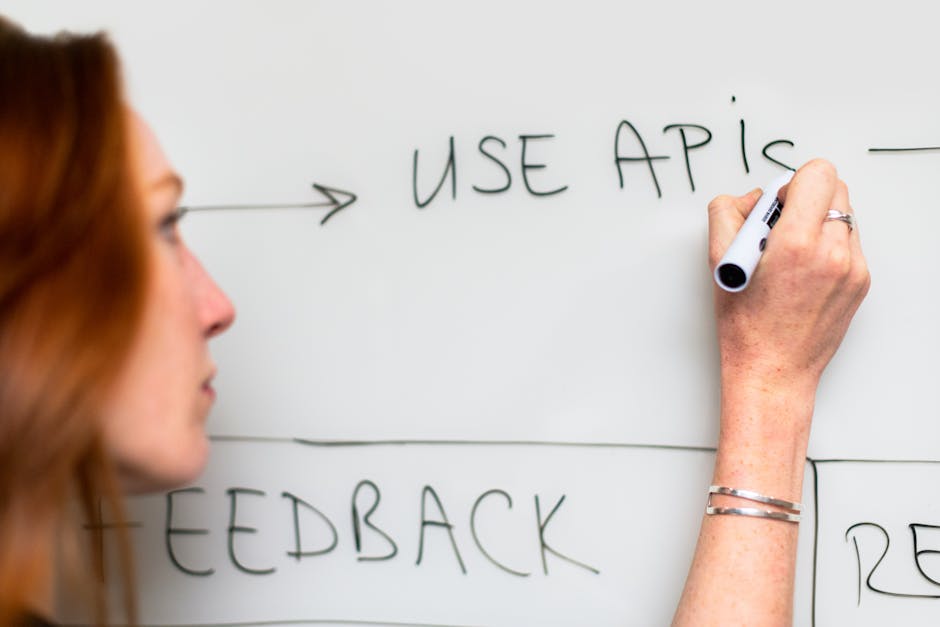
Your proof pack should include a short recording, a technical one-pager, and a non-technical overview. The goal is to let stakeholders share your materials internally without you present, because procurement decisions often happen in rooms you never enter.
Include these components:
- A 3-5 minute demo video showing one workflow end-to-end
- A one-page architecture overview with a simple diagram
- A release and QA checklist that matches your methodology
- A short risk and mitigation table (security, performance, timeline)
- A "next steps" proposal section with clear options
Between lists and attachments, add narrative: what each artifact is for and how to use it. For example, "Send the non-technical overview to leadership, and the architecture page to IT for review."
Also include one small "credibility anchor" that signals real-world experience, such as a snippet of sanitized monitoring screenshots, a sample pull request review checklist, or a deployment pipeline overview. It's hard to fake operational maturity.
Finally, make sure your portfolio site supports this package. If your site needs a structure that attracts leads and keeps them moving, How to Build a Personal Portfolio Site can guide how to organize proof for conversions.
FAQ
What Software Development Methodologies Should I Mention in a Client Demo?
Mention the methodology you actually follow, then translate it into outcomes. Agile or iterative delivery works well for most dynamic web applications because it supports feedback loops and incremental releases. If you use Scrum, keep it simple: sprints, reviews, and a prioritized backlog. If you use Kanban, explain how work-in-progress limits keep throughput predictable.
The key is not the label, it's the operational behavior: how you handle changing requirements, how you prevent quality regressions, and how you communicate progress.
How Do I Showcase a Dynamic Web Application Without Sharing Proprietary Code?
Focus on workflows, architecture boundaries, and test evidence rather than code details. You can show API responses with sensitive fields removed, use demo accounts, and present diagrams that explain modules without exposing implementation. Screen recordings also help, because they convey behavior without handing over repositories.
If a technical stakeholder asks for deeper proof, offer a guided walkthrough of a sanitized pull request or a private repository tour under NDA.
What's the Best Length for a Client-Facing Demo of a Dynamic Web App?
Aim for 10 to 15 minutes live, followed by Q and A. Within the first two minutes, show the core outcome so the client knows the demo is relevant. After that, spend time on the dynamic behavior: permissions, state changes, real-time updates, and error handling.
Keep a 3 to 5 minute recorded version ready as part of your proof pack, since many decisions happen asynchronously.
How Can I Prove Quality and Reliability to Non-Technical Stakeholders?
Use plain-language proof points: automated tests, release checklists, monitoring, and rollback plans. Explain what those practices prevent, such as downtime, data errors, or surprise costs. A short "risk and mitigation" table is especially effective because it signals you've thought through worst-case scenarios.
You can also reference trusted standards like OWASP Top 10 to show you're aligned with recognized web security practices.
What Should I Include in a Proposal After the Demo?
Include a summary of the problem, the proposed workflow you demonstrated, and a phased delivery plan with clear outputs. Add assumptions, constraints, and what you need from the client (access, stakeholders, feedback timing). Then provide 2 to 3 options, such as MVP only, MVP plus integrations, or MVP plus analytics and optimization.
Tie each option back to your Software Development Methodologies so the client sees a predictable path from idea to shipped, maintainable software.
Closing: Sell the Process, Then Let the App Prove It
Dynamic web applications are easy to admire and hard to trust, until you show the method behind them. If you consistently present Software Development Methodologies alongside real workflows, measurable proof, and a clear delivery plan, clients stop evaluating you as "a developer with a cool demo" and start viewing you as a partner who can ship.
If you want a second set of eyes on your portfolio demo flow or a proof pack tailored to your niche, reach out through https://christophermorta.com and share your current demo link plus the type of clients you want to attract. I'll tell you exactly what to clarify, what to cut, and what to emphasize to win stronger projects.
Sources: